
03 March 2026
The hidden cost of low pay in the social care sector
Our report for the Joseph Rowntree Foundation.
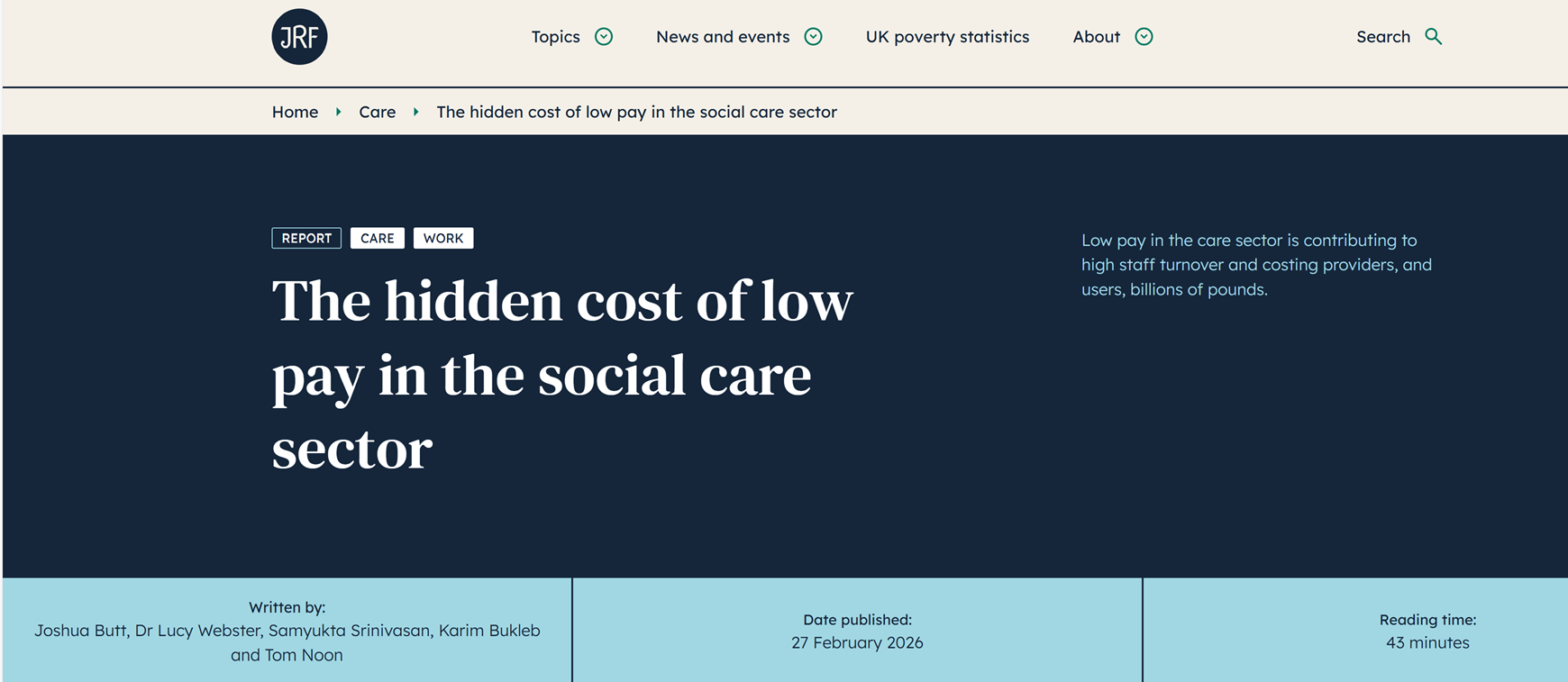
We are pleased to share our new report with the Joseph Rowntree Foundation, The hidden cost of low pay in the social care sector. The report shines a light on a question that receives too little attention in debates about social care funding, what does low pay actually cost?
Policy discussions often focus on the price of raising wages, but much less attention is given to the financial and operational consequences of keeping pay low.
As of March 2024, 40% of adult social care workers in England were paid below the Real Living Wage. At the same time, the sector faces persistently high vacancy and turnover rates. Our research examines the link between low pay and staff turnover, and quantifies both the financial costs and the lost output associated with workforce instability.
What we found
Drawing on interviews and financial data from independent care providers across England, alongside sector workforce modelling, we found that:
- Recruiting a new care worker costs a median of £7,870 per hire, including recruitment, training and agency costs.
- The median lost output cost per vacancy, including the time taken to recruit and train a replacement, is £9,282.
- Nine in ten care workers who moved roles within the sector received a pay rise when they did so.
Providers described a constant cycle of recruitment, training and backfilling vacancies. Beyond direct financial costs, this instability affects management capacity, staff wellbeing and continuity of care.
The potential impact of paying the Real Living Wage
We modelled the potential impact of paying all care workers at least the Real Living Wage. Over a 15 year period, this could:
- Avoid £2.99bn in direct financial costs linked to turnover, such as recruitment, training and agency spend.
- Prevent £3.58bn in lost output costs associated with vacancies and training periods.
- Generate an estimated net sector benefit of around £3.06bn when accounting for additional Employer National Insurance Contributions and Gross Operating Surplus.
While increasing pay requires upfront investment, the analysis highlights that low pay also carries significant costs for providers and the wider system. As policy discussions progress around a Fair Pay Agreement for the adult social care sector, this research adds to the evidence on the economic and workforce implications of continued low wages.