
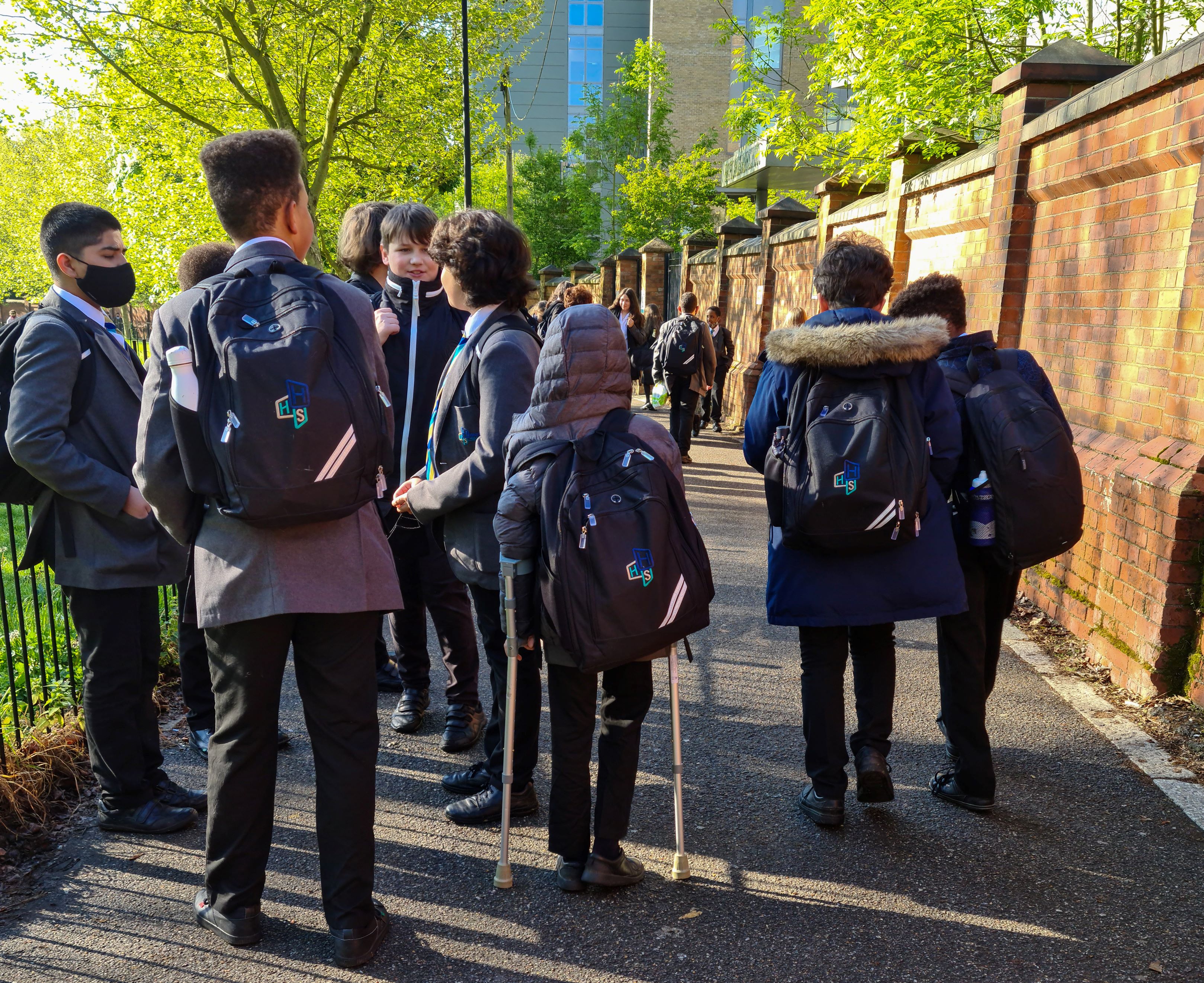
Future Men's Boys Development Programme
Efficacy study. Randomised controlled trial. School engagement. School exclusion. Social and emotional learning. Implementation and Process evaluation. Cost assessment. Youth Endowment Fund. Education Endowment Foundation. Future Men.
Purpose of the project
Cordis Bright was commissioned by the Youth Endowment Fund (YEF) and Education Endowment Foundation (EEF) to conduct an efficacy study RCT of Future Men’s Boys’ Development Programme (BDP).
The evaluation tested whether the BDP improves school engagement and related outcomes for boys at risk of disengagement or exclusion from school. It combined a randomised controlled trial (RCT) with an implementation and process evaluation (IPE) and cost assessment.
What is the Boys’ Development Programme?
Future Men’s BDP is a targeted, manualised social and emotional learning programme for boys in Years 7 to 11 who are at risk of disengagement or exclusion from school.
The programme consists of 12 weekly, one-to-one sessions of around 50 to 60 minutes, delivered in school by trained Future Men project co-ordinators. Sessions are tailored to individual boys but cover six core topics:
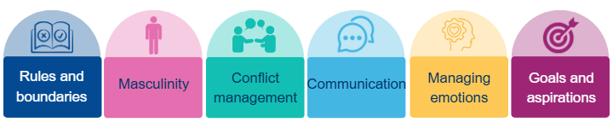
The programme aims to strengthen boys’ emotional regulation, communication and conflict-resolution skills, relationships and sense of school belonging. A central part of the model is developing a trusted relationship with a project co-ordinator who can support reflection, self-regulation and positive engagement with school.
Methodology
The efficacy study used a two-arm, parallel RCT, with boys randomly allocated either to receive the BDP or to a Signposting group receiving business-as-usual school support.
The trial took place between September 2023 and July 2025 across eight mainstream secondary schools in South London. In total, 486 boys were randomised, with 243 allocated to the BDP and 243 to the Signposting group.
The primary outcome was school engagement, measured using the School Connectedness Questionnaire. Secondary outcomes included behavioural difficulties, emotional symptoms, peer relationships and relationships with teachers. Outcomes were measured at baseline, 12 weeks post-randomisation and 24 weeks post-randomisation.
An implementation and process evaluation ran alongside the trial to understand how effectively the BDP was delivered, what helped or hindered implementation, boys’ experiences of the programme and how implementation related to outcomes. The study also included exploratory analysis of school administrative data on attendance and exclusions and a cost assessment.
Key findings
The study received the Youth Endowment Fund’s highest evidence security rating, reflecting the strength of the evaluation design and providing a high degree of confidence in the reliability of the primary finding.
The study found that:
- The BDP had a small positive effect on boys’ school engagement immediately after the programme. Boys who received the BDP had slightly higher levels of school engagement than boys receiving usual school support.
- Effects across the secondary outcomes were mixed. The BDP had a moderate positive effect on reducing both behavioural difficulties and emotional difficulties, and a small positive effect on improving teacher bonding. There was also a moderate negative effect on peer difficulties, meaning that boys receiving the BDP reported greater peer difficulties. As these were secondary outcomes, they should be interpreted more cautiously.
- Exploratory follow-up suggested that improvements may have strengthened over time. Twelve weeks after the programme ended, the BDP had a moderate positive effect on school engagement. At this later follow-up, there was also a moderate positive effect on reducing behavioural difficulties, small positive effects on emotional difficulties and teacher bonding, and a small negative effect on peer difficulties.
- Exploratory analysis of school administrative data provided encouraging evidence on exclusions. Data from five of the eight schools showed a moderate reduction in the number of exclusion incidents and a large reduction in the duration of suspensions among boys receiving the BDP, with a small negative effect on attendance. These findings should be interpreted cautiously because the analysis was exploratory and administrative data were not available from all participating schools.
- The BDP successfully reached its intended cohort and was generally delivered as intended. The programme engaged boys from racially minoritised and low-income backgrounds and was supported by clear referral and screening processes, relatable practitioners and engaging programme content. Some challenges emerged around referrals for boys whose needs were less clearly suited to the programme, accessibility for boys with language or learning needs, and practical issues associated with delivery in schools.
The evaluation also provided exploratory evidence about how the BDP may bring about change. The quantitative findings were consistent with a pathway in which stronger relationships between boys and their project co-ordinators supported later improvements in school engagement. This was supported by qualitative findings, with boys describing project co-ordinators as approachable, trustworthy and easy to talk to.
Looking ahead
This evaluation makes an important contribution to understanding whether and how relationship-based social-emotional learning approaches can support boys experiencing difficulties with school engagement.
This is the result of a single study, and it should be noted that several of the positive findings - including those relating to the later follow-up and school administrative data - were exploratory. Further research would therefore be valuable to understand whether these effects are replicated and sustained over a longer period.
Nevertheless, the findings provide important new UK evidence on targeted support for boys at risk of school disengagement and exclusion, while also highlighting the potential importance of consistent, trusted adult relationships.
Cordis Bright would like to thank every boy, school, practitioner and partner who took part in the study. Their contribution has helped strengthen the evidence available to schools, commissioners and policymakers seeking to support boys at risk of disengagement and exclusion.
Resources
Future Men’s Boys Development Programme efficacy study report. The final evaluation report presents findings from the RCT, implementation and process evaluation, exploratory school administrative data analysis and cost assessment.
Future Men's Boys Development Programme statistical analysis plan. The Statistical Analysis Plan sets out the pre-specified approach to analysing the trial, including the primary and secondary outcomes, subgroup analyses and analysis of programme receipt.
Future Men's Boys Development Programme study protocol. The evaluation protocol sets out the rationale for the study and the planned approach and methods for the efficacy trial and implementation and process evaluation.
More information about the study is available on the YEF website. The study has also been published on the ISRCTN registry.
For more information about the Future Men evaluation, please contact Emma Andersen.